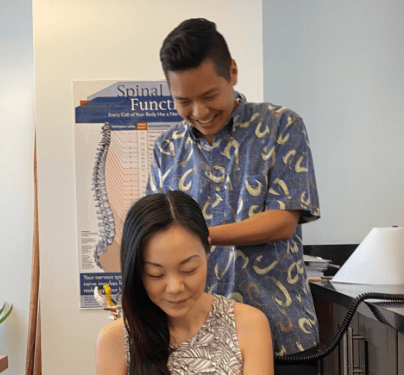
Vertigo stops you in your tracks. That sudden spinning, the room tilting when you stand, the unsteadiness that makes even walking feel unsafe. If dizziness and balance problems are affecting your daily life, Honolulu vertigo chiropractic care at Ho'ola Chiropractic may help you find real relief. Vertigo is characterized by a false sensation of movement, and for many patients, the root cause traces back to the upper cervical spine. Our chiropractic clinic offers drug-free, non-invasive chiropractic adjustments designed to address nerve interference, restore proper alignment, and support your body's ability to regain balance. Chiropractic care is a non-invasive approach that offers drug-free relief. Call (808) 772-8284 or fill out our contact form to schedule your initial visit.
Yes, chiropractic care can be a meaningful part of managing vertigo, particularly when the condition involves the cervical spine or nervous system. At Ho'ola Chiropractic in Honolulu, we focus on identifying whether nerve interference in the upper neck is contributing to your symptoms. Chiropractic adjustments aim to reduce nerve irritation and support proper spinal communication affecting balance, and chiropractic care helps manage vertigo by realigning the upper neck.
Upper cervical adjustments aim to restore proper alignment at the atlas and axis, which sit close to the brainstem. When these bones are misaligned, they can disrupt the signals your brain receives about balance and spatial orientation. Vestibular exercises train the nervous system to adapt to inner-ear disruptions, and we often incorporate vestibular rehabilitation alongside manual corrections for a more complete approach.
Chiropractic care is a drug-free approach to treating vertigo, making it a practical option for patients who want relief without relying on medication. While outcomes vary depending on the cause and severity, many patients notice meaningful changes after just a few sessions.
Absolutely. The connection between the cervical spine and the vestibular system is well-documented. The upper cervical spine, specifically the C1 and C2 vertebrae, sits directly beneath the brainstem. When these bones shift out of proper alignment, they can:
Misalignments in the upper neck can restrict blood flow through the vertebral arteries, which supply critical areas of the brain involved in balance and coordination. This is how cervicogenic dizziness develops. Patients often report that neck movement, turning the head, or sustained posture triggers their symptoms.
Trauma such as whiplash from car accidents, sports injuries, or even years of poor posture can shift these vertebrae enough to affect how the brain receives spatial information. At Ho'ola Chiropractic, our Honolulu team uses imaging and hands-on assessment to evaluate whether an underlying structural issue in the neck is contributing to your vertigo.
The right specialist depends on the type of vertigo you are experiencing:
In many cases, collaborative care between these providers delivers the strongest outcomes. If we determine during your evaluation that your vertigo has a cause outside our scope, we will help coordinate the appropriate referral.
Recovery timelines vary from person to person, and we always want to set honest expectations. Several factors influence how quickly your symptoms may improve:
Published case series show that patients undergoing upper cervical chiropractic care have reported significant improvement within 1 to 6 months, with some noticing changes after their first adjustment. At Ho'ola Chiropractic in Honolulu, we track your progress with objective measures like posture analysis and symptom scoring so we can adjust your plan as needed.
We do not promise instant relief because every patient is different, but we are committed to helping you see steady, measurable progress.
What you eat and drink can play a supportive role alongside your chiropractic care. While diet alone will not resolve vertigo, certain choices can reduce the frequency or intensity of episodes:
Helpful habits:
Foods and drinks to limit or avoid:
Good sleep habits and attention to posture during meals and desk work also make a difference. At Ho'ola Chiropractic, we view these lifestyle factors as part of a holistic approach to your overall care. Diet modifications work alongside chiropractic adjustments, not as a replacement.

Many conditions produce dizziness or unsteadiness that patients initially describe as vertigo. Accurate assessment is essential because the treatment for each condition differs significantly:
At Ho'ola Chiropractic in Honolulu, our evaluation process includes a thorough health history, physical examination, and diagnostic imaging to differentiate true vertigo from these other conditions. When we identify a cause that falls outside our scope, we refer you to the appropriate doctor so you receive the right treatment for your specific situation.
The right specialist depends on the type of vertigo you are experiencing:
In many cases, collaborative care between these providers delivers the strongest outcomes. If we determine during your evaluation that your vertigo has a cause outside our scope, we will help coordinate the appropriate referral.
We have built a strong reputation across the Honolulu community through real results, honest care, and clinical training.
Dr. Timothy Luke DC trained under respected upper cervical chiropractors including Dr. Tom Forest and Dr. Truong. This focused mentorship gives our team hands-on insight for addressing complex vertigo cases and chronic dizziness right here in Honolulu.
Our chiropractic office features state-of-the-art low-radiation digital X-ray technology, thermography, and detailed postural analysis. Clinics evaluate patients using digital imaging to locate misalignments linked to vertigo, and our approach ensures every treatment plan starts with precision.
Patients across Kaka'ako, McCully-Mo'ili'ili, Waikiki, and the greater Kapiolani Boulevard corridor trust our clinic. With consistent high satisfaction ratings and hundreds of positive reviews, our outcomes speak for themselves within the Honolulu community.
Dr. Luke graduated summa cum laude from Life Chiropractic College West and received the Life West Medal of Honors for clinical excellence and patient treatment results. That academic rigor shows up in every chiropractic treatment plan we develop.
Vertigo is the sensation that you or your surroundings are moving or spinning when no actual movement is taking place. It is a symptom stemming from a disruption in the vestibular system—the body's primary balance center located within the inner ear and brainstem. Many people describe the sensation as feeling as though they have just stepped off a spinning amusement ride.
The most common form of vertigo, triggered by sudden changes in head position.
A chronic inner ear disorder characterized by vertigo episodes, ringing in the ears (tinnitus), and a feeling of fullness or hearing loss.
Inflammation of the inner ear balance structures, often triggered by a viral or bacterial infection.
According to research published in the Archives of Internal Medicine, an estimated 69 million adult Americans experience vestibular dysfunction.
An often-overlooked factor in balance and vestibular issues is an upper cervical (neck) misalignment. Physical traumas such as car accidents, sports injuries, or falls can misalign the top two vertebrae in the spine (the Atlas and Axis).
When the upper cervical spine is misaligned, it can impact surrounding neurological and vascular structures:
The top vertebrae surround the brainstem. Irritation in this region can disrupt balance signals sent via the vestibulocochlear nerve (CN VIII) between the inner ear and the brain.
Cervical muscle tension and nerve irritation can impair the function of the Eustachian tubes, leading to fluid retention and pressure imbalances in the ear.
The vertebral arteries pass directly through the upper neck vertebrae. Misalignments can restrict optimal blood flow to the brainstem and vestibular system.
Dr. Timothy Luke focuses on precise, gentle upper cervical corrections to restore proper alignment to the C1 (Atlas) and C2 (Axis) vertebrae.
By relieving structural pressure on the upper neck, upper cervical adjustments help:
Restore proper nervous system signal transmission along CN VIII.
Promote normal fluid drainage and support middle ear pressure balance.
Support optimal blood flow to the brainstem and inner ear centers.
Through precise corrections, Dr. Luke helps many Honolulu residents find natural, long-term relief from vertigo and balance disorders without relying solely on temporary symptom management.
Vertigo symptoms can show up without warning and make even simple activities feel overwhelming. Here is what many of our patients describe.
The room starts rotating or the floor seems to tilt beneath your feet. This spinning feeling can occur when turning your head, sitting up, or bending over. Symptoms of vertigo include nausea, vomiting, and abnormal eye movements. These episodes may last a few seconds or linger for hours, leaving you unable to focus or move with confidence.
Balance problems can turn routine tasks into hazards. Feeling unsteady while standing in line, walking through a parking lot, or climbing stairs puts you at real risk of falling. Many patients describe a persistent feeling of being pulled to one side, which affects their body's position in space throughout the day.
Vertigo often brings waves of nausea or actual vomiting alongside blurred vision and difficulty focusing. These symptoms can make driving dangerous, affect work performance, and drain your energy. Most people dealing with these symptoms avoid activities they once enjoyed.
Some patients feel like the room is moving even when sitting still. Others describe a persistent fogginess where the brain receives conflicting signals about where the body is in space. This kind of spatial disorientation affects concentration, sleep quality, and overall quality of life. When these symptoms persist, seeking professional attention is crucial.
Understanding the underlying cause of vertigo is the first step toward the right treatment. Dizziness and vertigo stem from several different sources, and each requires a tailored approach. Here are the most common causes:
BPPV is the most common cause of vertigo. Tiny calcium crystals in the inner ear become dislodged and shift into the semicircular canals, triggering brief but intense spinning episodes with head position changes. The Epley maneuver and canalith repositioning procedures often provide prompt relief for BPPV.
Cervicogenic dizziness originates from problems in the neck. Misalignment of the upper cervical spine, particularly at the C1 and C2 vertebrae, can disrupt proprioceptive signals that help the brain understand your body's position. Poor posture can lead to neck-related dizziness, and trauma from car accidents or whiplash can aggravate these issues further.
Vestibular neuritis causes sudden, severe vertigo and nausea, usually from viral inflammation of the vestibular nerve. This condition can leave patients unable to function for days.
Labyrinthitis involves inflammation in both the vestibular nerve and the inner ear structures, potentially causing hearing loss and tinnitus along with vertigo.
Meniere's disease produces episodes of vertigo, fluctuating hearing loss, tinnitus, and a feeling of fullness in the ear. It is associated with fluid imbalance in the inner ear.
Vestibular migraine connects dizziness to migraine patterns, sometimes occurring without a headache but with light sensitivity or visual changes.
Misaligned cervical vertebrae can restrict blood flow to the brain through the vertebral arteries. Upper cervical misalignment can also affect Eustachian tube function. When the nervous system is compromised at the upper neck, the vestibular system may receive distorted signals, contributing to ongoing dizziness.
Correcting upper spinal misalignments helps reduce neurological stress on balance signals. That is why identifying the underlying structural issue matters before starting any chiropractic treatment plan.
We want you to feel comfortable and informed at every stage. Here is how our vertigo chiropractic care process works from your first call through ongoing support.
During your initial visit, we review your complete health history, symptom timeline, and any prior workups from an ENT or neurologist. We listen carefully to understand your triggers, the severity of your dizziness, and how vertigo affects your daily life.
Chiropractors assess neck mobility and muscle tension in vertigo patients. We evaluate cervical joint motion, posture, and spinal alignment using digital X-ray imaging and thermography. Balance and gait testing help us identify the underlying cause behind your symptoms.
Based on examination findings, we develop a tailored plan that may include upper cervical chiropractic adjustments, soft tissue work, and vestibular rehabilitation exercises. Soft tissue therapy relieves neck muscle tightness to improve balance signals. Each plan is built around your specific needs and goals.
We monitor your progress at each visit, reassessing alignment and symptom changes. If needed, we adjust your treatment plan or coordinate with other health providers. Our focus stays on long-term improvement, not just temporary relief from your vertigo symptoms.
Living with dizziness and balance concerns does not have to be your normal. When patients search for the best vertigo chiropractor in Honolulu, HI, they are looking for real answers and a clear path forward. At Ho'ola Chiropractic, we provide thorough evaluations, precise chiropractic adjustments, and personalized care plans designed to address the root cause of your vertigo rather than just masking symptoms with medication.
Cervical adjustments reduce nerve irritation and improve blood flow to the brain, supporting proper function of your vestibular system. Whether your dizziness stems from a neck misalignment, an inner ear issue, or another underlying cause, our holistic approach gives your body the support it needs.
69 million Americans suffer from vestibular dysfunction yearly. You do not have to manage this alone. Call us at (808) 772-8284 or fill out our online contact form to schedule your appointment.
Research and source material referenced throughout this page.
Agrawal, Y., Carey, J. P., Della Santina, C. C., Schubert, M. C., & Minor, L. B. (2009). Disorders of balance and vestibular function in US adults: data from the National Health and Nutrition Examination Survey 2001-2004. Archives of Internal Medicine , 169(10), 938–944.
View DOI SourceNational Institute on Deafness and Other Communication Disorders (NIDCD). Balance Disorders Statistics. U.S. Department of Health and Human Services, National Institutes of Health.
Visit NIDCDBurcon, M. T. (2010). Upper cervical specific protocol and results for 139 patients with medically diagnosed Meniere’s disease. Journal of Vertebral Subluxation Research , 2010(Nov 14), 1–10.
These references are provided for educational and informational purposes and support the discussion of vertigo, vestibular function, and upper cervical care on this page.