


A chiropractor in Honolulu, HI often sees patients who started with mild neck stiffness and now feel sharp, burning, or tingling sensations running down one arm. The frustration is real. You stretch, adjust your pillow, maybe take an over-the-counter pain reliever, but the discomfort keeps returning. That nagging ache can interfere with sleep, work, and the activities you enjoy most. The good news is that this type of radiating pain usually has a traceable structural cause in the cervical spine, and once that root cause is identified, the right treatment path becomes much clearer. Understanding why your neck pain spreads is the first step toward getting it resolved.
The spinal nerves that exit the cervical spine travel through the neck and shoulder region and continue down into the arm and hand. When one of these nerves is compressed or irritated at its origin, the pain signal can travel the full length of that nerve pathway. This is why a problem in your neck can produce arm symptoms like tingling in the fingers, a dull ache near the shoulder blade, or even grip weakness. Cervical radiculopathy is the clinical term used when a nerve root in the neck is compressed or irritated, creating this radiating pattern. Chiropractic care aims to improve joint motion and reduce nerve irritation so that pain and tingling in the neck and shoulder complex can ease naturally over time.
Key Takeaways
- Neck pain that travels into the shoulder or arm is often caused by irritated cervical nerves, commonly from conditions like cervical radiculopathy, a bulging disc, or bone spurs pressing on a nearby nerve root.
- A chiropractor in Honolulu, HI evaluates both the neck and shoulder to identify the true source of radiating pain, using neurological tests, physical examination, and imaging when needed.
- Many patients improve with conservative care such as spinal adjustments, posture corrections, and targeted exercises without requiring surgery.
- Red-flag symptoms like sudden muscle weakness, loss of coordination, or bowel and bladder changes need urgent medical evaluation.
- Long term relief depends on treating the underlying neck problems rather than masking symptoms with temporary fixes.
Neck and Shoulder Anatomy: How One Area Affects the Other
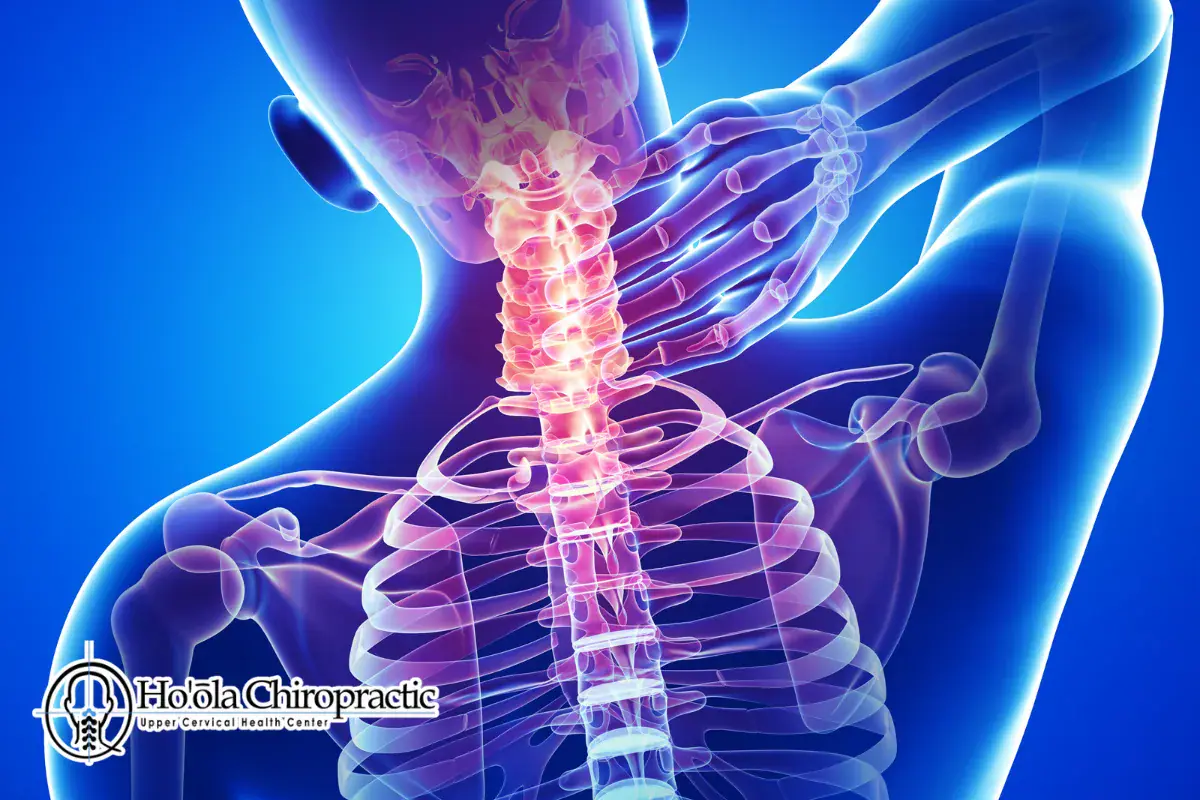
The cervical spine contains seven vertebrae, labeled C1 through C7, stacked between intervertebral discs and connected by facet joints. This region of the spine protects the spinal cord and nerve roots while allowing a wide range of head and neck motion. Eight pairs of cervical nerves branch out from the spinal cord, and each cervical nerve root controls sensation in specific arm regions. The cervical spine houses nerve roots that supply sensation and motor function to the shoulders, arms, and hands.
Each cervical level supplies different areas:
- C5 and C6 nerve roots primarily serve the shoulder, upper arm, and thumb side of the forearm.
- The C7 nerve root covers the middle finger and the back of the forearm.
- C8 nerve roots extend into the ring and little fingers.
Spinal discs, joints, and ligaments stabilize the neck, while shoulder structures like the ball-and-socket shoulder joint, rotator cuff muscles, capsule, and bursa handle lifting and rotating the arm. Muscle strain in the neck or shoulder can mimic deeper nerve related discomfort, which is why a thorough exam at a chiropractic clinic is important to distinguish muscle tension from nerve-driven arm pain. The peripheral nerve network in the arm is simply an extension of these cervical nerves, which explains why tingling, numbness, or muscle weakness may reach all the way into the forearm or hand.
Why Neck Pain Radiates: The Role of Cervical Nerves and Referred Pain
Radiating pain is different from localized soreness. Where a stiff neck tends to stay in one spot, radicular pain follows a nerve pathway and can produce shooting pain, burning pain, or electric-type sensations from the neck into the shoulder and down the arm. Cervical radiculopathy occurs when a nerve root is compressed, and it often causes sharp, shooting, or burning pain that travels into the shoulder or arm. Symptoms of cervical radiculopathy can include tingling, numbness, burning pain, or weakness in the arm, and the pain follows nerve pathways in a predictable pattern.
Referred pain adds another layer of complexity:
- Structures in the neck, such as facet joints and damaged discs, share neural pathways with shoulder and upper arm tissues. The brain can misinterpret where the signal originates, so you may feel shoulder pain even though the problem sits in the cervical spine.
- Muscle spasm in the deep neck muscles can send aching sensations into the shoulder blade and upper back, further blurring the picture.
- Arm symptoms such as progressive weakness, grip changes, or difficulty with fine-motor tasks may signal more significant nerve involvement beyond simple muscle tightness.
Chiropractors use neurological and orthopedic tests during a physical exam to determine whether the pain source is a spinal nerve, a peripheral nerve in the arm, or local shoulder structures. Getting the right diagnosis early prevents weeks of misdirected care.
Common Neck Problems That Cause Shoulder and Arm Pain

Several structural issues in the cervical spine can compress or irritate nerve roots, leading to neck pain that radiates into the shoulder and arm. Herniated discs can press on nerves, causing radiating pain. Degenerative changes, narrowed nerve openings, and inflamed joints all play a role.
Key causes include:
- Herniated or bulging disc pressing on a nearby nerve root
- Degenerative disc disease and age-related disc narrowing
- Bone spurs forming along vertebral edges
- Cervical spinal stenosis or foraminal narrowing
- Facet joint irritation and inflammation
These conditions can develop gradually through age-related wear and tear, repetitive strain, or poor posture. They can also appear suddenly following a sports injury, a fall, or a car accident. Each scenario calls for different chiropractic treatment strategies.
- Lasting relief usually depends on addressing posture, joint mechanics, and lifestyle habits rather than only treating occasional flare-ups.
Herniated or Bulging Disc in the Cervical Spine
A bulging disc occurs when the outer wall of a disc weakens and pushes outward. A disc herniation happens when the inner material breaks through the outer layer entirely. Intervertebral discs in the neck can bulge or herniate, placing pressure on adjacent nerve roots. Herniated discs can press on nearby cervical nerves, triggering significant discomfort.
Typical symptoms include:
- One-sided neck pain with shoulder blade discomfort
- Radiating arm pain that may reach the hand or middle finger
- Tingling or numbness in specific fingers
- Pain worsened by turning or extending the neck
Imaging such as MRI can confirm disc changes, but chiropractors also rely on detailed medical history review and neurologic exams to determine if a disc is the most likely pain generator. Conservative care comes first for most people. Chiropractic adjustments, gentle traction, targeted exercises, and activity modifications help many patients avoid surgery. Population studies show that roughly 90 percent of cervical radiculopathy cases are asymptomatic or only mildly affected at long-term follow-up with appropriate management.
Degenerative Disc Disease, Bone Spurs, and Spinal Stenosis
Degenerative disc disease develops over time as spinal discs lose height and hydration, changing how forces distribute through the cervical spine. Age-related wear and tear can lead to degenerative disc disease and cervical spondylosis, resulting in pain and stiffness in the neck. As disc height decreases, the body may form bone spurs along vertebral edges and joints to stabilize motion. Bone spurs can narrow nerve openings, causing irritation and leading to radiating symptoms.
Degenerative disc disease narrows nerve passageways over time, increasing the likelihood of nerve compression. Cervical spinal stenosis occurs when the spinal canal itself becomes too narrow, compressing nerves leading to arm pain. Foraminal stenosis can narrow the openings through which nerves exit the spinal column, causing nerve compression at individual levels. Patients may notice chronic pain, neck stiffness, shoulder aches, and arm symptoms such as numbness or tingling.
Early changes often respond well to posture correction, strengthening exercises, and chiropractic care. More advanced stenosis requires close coordination with medical providers for appropriate imaging and possible referral when neurological deficits are present.
Poor Posture, Muscle Strain, and Whiplash-Type Injuries
Forward head posture, long hours at a computer, or frequent phone use increases the load on the cervical spine and surrounding muscles. Long hours at a desk or on a phone can increase the demand on neck and upper-back muscles, exacerbating pain. Poor posture and muscle strain are common causes of neck symptoms that radiate into the arms. Poor posture can strain neck muscles and irritate nearby nerves over time.
Chronic muscle strain in the neck and shoulder girdle can compress small nerves, irritate joints, and cause muscle tension that radiates into the upper back and upper arm. Myofascial trigger points in neck muscles can create referral pain patterns that mimic nerve impingement, making the condition feel more severe than it may be.
- Whiplash injuries from traffic collisions or sudden impacts can damage ligaments, joints, and discs. Symptoms sometimes appear days after the incident, making it easy to dismiss early warning signs.
Proper evaluation in Honolulu should follow medical guidelines, ruling out fracture or serious trauma before beginning care after an accident. Gentle, staged rehabilitation typically works better than prolonged immobilization for these soft-tissue-driven neck problems.
Read Can Whiplash Injuries Be Treated by a Chiropractor in Honolulu, HI?
How to Tell if Your Arm Pain Is Coming from the Neck, Shoulder, or Peripheral Nerve

Shoulder and neck pain can feel remarkably similar. Arm symptoms may originate from the cervical spine, the shoulder joint, or a compressed peripheral nerve at the elbow or wrist. Getting the right diagnosis matters because treatment for each source is different.
Classic neck-related patterns:
- Pain starting in the neck, shoulder radiating past the shoulder blade into the arm or hand
- Tingling, numbness, or weakness following a specific nerve root distribution
- Symptoms that worsen with neck movements rather than shoulder movements
- Patients feel a pinched nerve sensation that intensifies with head rotation
Common shoulder-origin patterns:
- Pain localized to the front or side of the shoulder
- Worse with overhead lifting or reaching behind the back
- Conditions like frozen shoulder or rotator cuff tears cause local stiffness but not always neck-related nerve pain
- Not typically accompanied by significant neck stiffness
Peripheral nerve entrapments, such as carpal tunnel syndrome at the wrist or ulnar nerve compression at the elbow, can produce hand and arm symptoms without much neck pain. These often feel worse with repeated gripping or elbow flexion.
A chiropractor uses orthopedic tests, shoulder motion assessments, nerve-tension tests, and reflex checks to narrow down whether neck problems, shoulder pathology, or peripheral nerve issues are primarily responsible.
Red Flag Symptoms That Need Immediate Medical Care
Most neck and shoulder pain is not an emergency. However, some signs require you to seek urgent care without delay.
- Sudden severe weakness in the arm or hand
- Difficulty walking or loss of coordination
- Changes in bowel or bladder control
- Intense neck pain after high-impact trauma
Prompt assessment is advised for radiating neck pain accompanied by weakness or loss of coordination. Chest pain, shortness of breath, or jaw pain combined with shoulder or arm discomfort can signal a cardiac event and should be evaluated immediately at an emergency facility.
A chiropractor in Honolulu, HI should always follow current medical and chiropractic standards, referring patients to appropriate emergency or medical services when red flags are present. Hawaii regulations require chiropractors to recognize and act on situations outside their scope of practice.
How a Honolulu Chiropractor Evaluates Radiating Neck and Arm Pain

During an initial visit for neck and arm pain, you can expect a calm, thorough process. A thorough chiropractic assessment should include reviewing medical history and performing neurological tests. The provider will ask about the onset of your pain, its exact location, activities that worsen or relieve pain, prior injuries, overall health, and any neurological changes like tingling or weakness.
The physical examination typically includes:
- Posture analysis and observation
- Neck range of motion testing
- Shoulder testing and rotator cuff screening
- Strength testing of the arm and hand
- Reflex checks at the biceps, triceps, and wrist
- Sensory evaluation along the arm
Licensed chiropractors in Honolulu are authorized to order and perform diagnostic imaging, such as digital X-rays, when clinically indicated to better understand joint alignment and structural issues. In some cases, collaboration with other healthcare providers and advanced imaging such as MRI or CT scans is recommended for complex or non-improving cases.
Distinguishing Between Muscle, Joint, and Nerve Pain
Knowing which tissues are causing symptoms is essential before starting any treatment plan. Each type of tissue produces a distinct sensation:
- Muscular pain tends to feel like a dull ache, tight and stiff, often improved with gentle movement
- Joint pain is typically deep and sharp with specific motions, sometimes producing a catching or grinding sensation
- Nerve pain presents as burning, shooting, or electric sensations with possible numbness, tingling, or nerve involvement in specific areas
Common clinical tests include Spurling's test for nerve root compression, the shoulder abduction sign for nerve related discomfort, and specific rotator cuff tests to rule out shoulder pathology. Accurate diagnosis is the foundation for safe and effective care, particularly when arm symptoms are present.
Conservative Treatment Options for Radiating Neck and Shoulder Pain

Many patients with radiating neck pain improve without surgery through a combination of conservative care, targeted exercises, and lifestyle changes. Chiropractic care for neck pain radiating into the arms may involve spinal adjustments, soft tissue therapy, and rehabilitative exercises.
Conservative treatment options include:
- Specific spinal adjustments and mobilization
- Soft-tissue therapy for muscle spasm and tension
- Postural training and ergonomic coaching
- Home exercise programs focused on the neck and shoulder area
- SoftWave Therapy, which promotes healing at the cellular level
A treatment plan based on the underlying cause, whether a bulging disc, degenerative disc disease, or muscle strain, produces better results than a one-size-fits-all protocol. Chiropractors often coordinate with medical providers regarding medications or injections when appropriate, staying within the scope of practice defined by Hawaii law.
Chiropractic Adjustments and Gentle Spinal Techniques
A cervical adjustment is designed to restore biomechanical motion in restricted joints and decrease mechanical stress on surrounding tissues. The goal is to reduce pressure on the nerve root and help the body heal. Some patients benefit from very gentle, low-force techniques, especially in the upper cervical region, which can be appropriate for those who are nervous about traditional manual adjustments.
- Chiropractors in Honolulu follow state licensing requirements under Hawaii Revised Statutes Chapter 442 and current clinical guidelines to deliver safe, evidence-informed spinal care.
Informed consent, patient comfort, and gradual progress matter more than aggressive, high-frequency manipulation, especially in sensitive cases where nerve compression is confirmed.
Posture, Ergonomics, and Targeted Exercises
Forward head posture and rounded shoulders increase pressure on cervical discs and nearby nerves, which may worsen radiating pain. Small changes in your daily setup can make a significant difference.
- Position your monitor at eye level
- Use a chair with proper lumbar and cervical support
- Take frequent breaks from screens every 30 to 45 minutes
- Use a headset instead of cradling the phone between your ear and shoulder
Gentle home exercises like chin tucks, scapular retraction, and light isometric neck work can relieve pain and reduce muscle tension over time. These exercises should not aggravate arm symptoms. If you have significant neck problems or arm symptoms, seek professional guidance before starting any new program to ensure safety. Physical therapy can improve neck strength and flexibility when integrated alongside chiropractic care.
When Other Treatments May Be Needed
While chiropractic care helps many patients find sufficient relief, some need co-managed or alternative care depending on the severity of nerve compression.
Possible medical treatment options include:
- Corticosteroid injections, which reduce inflammation and alleviate pain
- Epidural steroid injections, which may help reduce nerve inflammation in more severe cases
- Physical therapy for strengthening and mobility work
- Short-term medications prescribed by a physician for acute flare-ups
Surgery is considered when conservative treatments fail to improve function or when neurological symptoms worsen. If conservative care does not yield expected progress, a chiropractor will coordinate a medical referral to an orthopedic spine specialist or neurosurgeon to discuss advanced options for cases involving severe disc herniation or progressive weakness. A responsible chiropractor monitors progress and recommends additional evaluation if expected improvements do not occur within a reasonable timeframe. The goal is always to find the right treatment that provides lasting relief.
Strategies for Long Term Relief and Prevention of Future Flare-Ups

Long term relief from radiating neck and shoulder pain requires addressing causes like poor posture, repetitive strain, and deconditioning rather than only responding to symptom flares. If pain persists despite initial improvements, revisiting the treatment plan is important.
Ongoing home care plays a critical role:
- Regular stretching and strengthening of deep neck flexors and upper back muscles
- Mindful movement habits throughout the day, especially during work
- Periodic chiropractic checkups to maintain joint mobility and detect early changes before they produce pronounced arm symptoms
Lifestyle changes such as adequate sleep, stress management, and consistent physical activity support the spine and nervous system. When symptoms persist despite self-care, returning for professional reassessment helps determine whether adjustments to your plan are needed.
Patients in Honolulu who take an active role in their recovery often experience fewer recurrences and better overall neck and shoulder function. Addressing the root cause rather than chasing symptoms is the most reliable path to reduce pain and regain full function.
Chiropractor in Honolulu, HI - Ho'ola Chiropractic
At Ho'ola Chiropractic, we specialize in evaluating and treating neck pain that radiates into the shoulders or arms. Our team provides careful assessments using modern diagnostics and personalized care plans designed to address the root cause of your discomfort, whether it stems from cervical radiculopathy, disc issues, muscle strain, or other neck problems. We are committed to safe, evidence-informed chiropractic care that follows all Hawaii regulations, and we proudly serve Honolulu and the surrounding communities.
If you are dealing with neck and shoulder or arm pain that will not go away, we encourage you to reach out. Call us at (808) 772-8284 or fill out our online contact form to schedule a consultation. Our goal is to help you move toward long term relief and better daily function through the right treatment approach for your specific situation.
Frequently Asked Questions
What is the best sleeping position if neck pain radiates into my arm?
Sleeping on your back or side with a supportive pillow that keeps your cervical spine in a neutral, aligned position is generally best. Avoid stomach sleeping, which forces the neck into rotation for extended periods and can aggravate nerve irritation. If you sleep on your side, a pillow between your knees helps overall spinal alignment, and placing a small pillow or folded towel under the affected arm can reduce tension on the cervical nerves. A pillow that is too high or too flat can increase pressure on the neck, so choose one that fills the gap between your head and mattress without tilting your head. If discomfort continues, consult a provider in Honolulu for personalized recommendations.
Can I keep working out if I have neck pain that travels into my shoulder or arm?
Many forms of exercise remain safe, including gentle cardio like walking or stationary cycling and light lower-body strength work. Avoid heavy overhead lifting, high-impact exercises, or movements that load the cervical spine until a healthcare professional clears you. Activities that increase radiating symptoms should be paused. A gradual return to full activity, guided by symptom monitoring, is the safest approach. Strengthening the upper back and postural muscles with light resistance can actually help your recovery when done correctly. The key is to listen to your body and avoid pushing through sharp or worsening nerve-type pain during any exercise.
How long does it usually take for radiating neck and arm pain to improve with conservative care?
General time frames vary depending on severity and cause. Mild cases involving muscle tension or minor nerve irritation may improve within two to four weeks. Moderate cases involving a bulging disc or early degenerative changes often take six to twelve weeks of consistent care. Factors that influence recovery speed include how long symptoms were present before starting treatment, adherence to home exercises, posture habits, overall health, and the specific diagnosis. Patients who commit to regular care visits and daily home exercises tend to recover faster and experience fewer setbacks. If no improvement occurs after several weeks, further evaluation and possible imaging may be recommended.
Do I always need an MRI if my neck pain goes into my arm?
Not always. Many cases of radiating neck pain can be initially evaluated through a thorough history and physical examination, including neurological testing and orthopedic maneuvers. Imaging such as MRI is typically reserved for cases where symptoms are persistent, worsening, or accompanied by red-flag findings like significant muscle weakness or coordination changes. An MRI provides detailed views of discs, nerves, and the spinal cord, which helps guide decisions when conservative care has not produced sufficient relief. While chiropractors can evaluate and order X-rays, advanced imaging like MRIs is typically coordinated through or referred to medical providers when clinically necessary.
Is it normal for only one arm to be affected by neck-related pain?
Yes, it is very common. Cervical radiculopathy typically affects just one side because a single nerve root is compressed or irritated on one side of the cervical spine. The specific nerve root involved determines which part of the arm, forearm, or hand is affected. Bilateral symptoms, where both arms are involved, can occur but are less common and may suggest a broader issue such as central spinal canal narrowing or multilevel disc disease. When both arms are affected, or when symptoms include balance problems or gait difficulty, a proper evaluation is especially important to rule out spinal cord compression or other more serious conditions.
Disclaimer
Disclaimer: This article is for general educational purposes only and does not replace individualized medical or chiropractic advice. Readers experiencing neck, shoulder, or arm pain should consult a licensed provider in Honolulu for proper evaluation, diagnosis, and a treatment plan tailored to their specific condition.
Read What Results Can I Expect From Meniere's Disease Chiropractic Care in Honolulu, HI?
